
The French real estate market underwent a marked correction between 2023 and 2024, with the volume of transactions for existing homes falling to around 778,000 sales by the end of November 2024 according to the Notaires de France. Since then, signs of recovery have multiplied: the volume is rising towards 892,000 transactions by the end of April 2025. This transitional window is changing buying, selling, and investment strategies. Here are ten concrete tips to take advantage of this context.
1. Leverage the end of the downward cycle to negotiate the purchase price

The purge of 2023-2024 has made sellers more realistic about their expectations. Negotiation margins have widened in most French departments, offering buyers rare leeway.
Supporting an offer with DVF (Demandes de Valeurs Foncières) data from the targeted neighborhood allows for justifying a price lower than the listed amount. A gap between the asking price and the signing price of several percentage points has become common in markets where supply exceeds demand.
The resources published on Mes Astuces Immo detail these negotiation mechanisms applied to the current context, with tailored reading grids by type of property.
2. Check the DPE before signing any compromise

Since January 1, 2025, properties classified G in the DPE are banned from being rented. Properties classified F will follow in 2028, and E in 2034. This regulatory timeline changes the game for rental investors as well as for primary residence buyers.
A property classified F or G may seem attractive due to its low price. The cost of energy renovation necessary to reach at least class E must be integrated into the overall budget before making an offer. Without this projection, the actual rental yield collapses.
3. Target a neighborhood by analyzing real transaction data

Public databases like DVF or the indices from Notaires de France allow for comparing prices per square meter by municipality, neighborhood, and type of property. These figures reflect actual sales, not listing prices.
A neighborhood where transaction volumes are rising while prices remain stable signals a market in recovery. Conversely, a sector where listing prices do not decrease but nothing sells indicates a persistent blockage. Analyzing volumes as well as prices avoids positioning oneself in a stagnant market.
4. Anticipate the rise in volumes rather than a surge in prices

The available data shows a recovery in volumes, not a spike in prices. Market analyses confirm a significant increase in signatures at notaries in 2025 compared to 2024, with a return of buyers in over 90 departments.
This configuration favors medium-term real estate projects. Buying in a market that is recovering through volumes allows for securing a property at a stabilized price before competition among buyers reduces negotiation margins.
5. Calibrate your personal contribution based on credit conditions

Interest rates have stabilized after the sharp rise in 2023. Banks have returned to a customer acquisition business logic, with reduced processing fees and shorter response times.
A contribution of 10 to 15% of the property’s price remains the threshold that unlocks the best conditions. Below this, the additional cost of credit over the total duration can represent several tens of thousands of euros. Simulating several contribution scenarios before searching for a property helps define a realistic budget.
6. Compare new and old properties with the total cost over ten years

The purchase price per square meter of new properties exceeds that of old ones, sometimes significantly. Reduced notary fees and the absence of short-term work partially offset this gap.
Over a ten-year horizon, the calculation includes:
- The condominium fees, often lower in new properties due to recent thermal standards
- The cost of bringing old properties up to DPE standards, which can reach several tens of thousands of euros for a property classified F or G
- The applicable taxation depending on the chosen scheme (furnished rental, real regime, current tax reduction schemes)
7. Have an independent appraisal done before making a purchase offer

The mandatory diagnostics (DPE, asbestos, lead, termites) do not cover the structural condition of the building. An independent expert can identify invisible issues: foundation cracks, rising damp, insulation defects not detected by the DPE.
The cost of a pre-purchase appraisal remains marginal compared to the amount of work it may reveal. This step is particularly relevant for single-family homes built before 1975, where compliance updates can be significant.
8. Study the local urban planning plan before buying land or a house
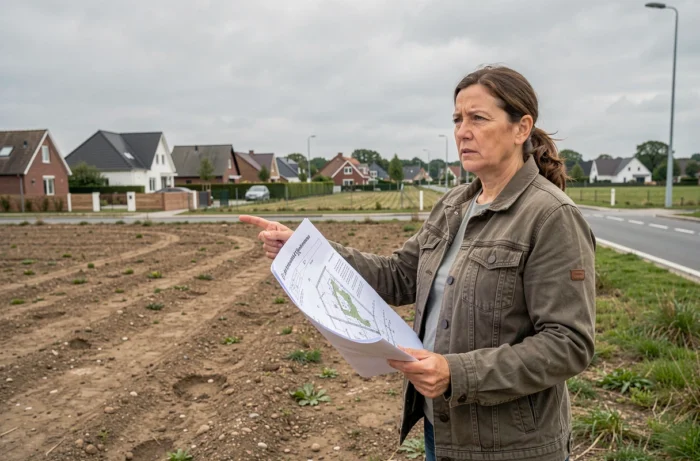
The PLU (local urban planning plan) determines what can be built, expanded, or modified on a plot. A project for an extension, elevation, or even a change of use can be blocked by zoning rules.
Consulting the PLU at the town hall before making an offer helps avoid a purchase with no development potential. Field feedback varies on this point: some buyers discover after signing that their project for parcel division is impossible in the concerned area.
9. Secure financing with a detailed suspensive clause

The suspensive clause for obtaining a loan protects the buyer in case of bank refusal. Its drafting should specify the borrowed amount, duration, maximum accepted rate, and the number of banks to be approached.
A clause that is too vague weakens the buyer’s protection. If it simply states “obtaining a loan” without amount or ceiling rate, the seller can contest the enforcement of the suspensive condition. Having this clause reviewed by a notary independent of the seller is a precaution that costs little.
10. Include condominium fees in the calculation of rental yield

An attractive gross yield can mask high condominium fees, especially in residences with elevators, caretakers, or extensive green spaces. The minutes of the last three general assemblies provide information on voted or planned works.
Calls for funds for facade renovations, roof repairs, or elevator upgrades can represent several thousand euros per unit. The net yield after charges and taxation is the only reliable indicator for comparing two rental investment opportunities.
The real estate market of 2024-2025 rewards buyers who prepare their files rigorously and base their decisions on verifiable data rather than media trends. Each project has its own constraints, and the difference often lies in the checks made before signing the compromise.