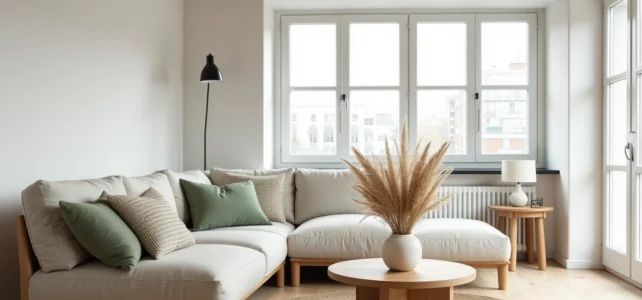
A beige sofa wedged between two white walls, a neutral gray rug, three matching cushions: we’ve all experienced that “clean” but characterless living room. The problem doesn’t stem from the budget or the size. It comes from a lack of visual friction, that little shift that transforms a functional room into a space where you want to linger.
Current decor trends are pushing precisely in this direction. We’re moving away from cold minimalism towards more textured, warmer interiors, where each material tells a story. Here’s how to translate this shift into concrete actions, room by room.
Raw materials and mixed textures: the foundation of timeless decor
When redecorating a living room or bedroom, the common reflex is to choose a style and then buy everything in the same range. The result looks cohesive on paper but flat in reality. Mixing raw materials breaks this monotony effortlessly.
Solid wood, natural stone, rattan, artisanal ceramics: these materials each bring a different texture to the touch and the eye. An untreated oak tabletop resting on black metal legs, a stoneware planter next to a blown glass vase, that’s the kind of contrast that adds depth to a space.
You can browse Place A’s decor inspirations to spot material combinations that work in real interiors, not just on mood boards.
The key takeaway: we’re not looking to accumulate. We’re looking to create contrasts in surfaces. A textured plaster wall behind a light wood shelf is enough to transform the perception of an entire room.
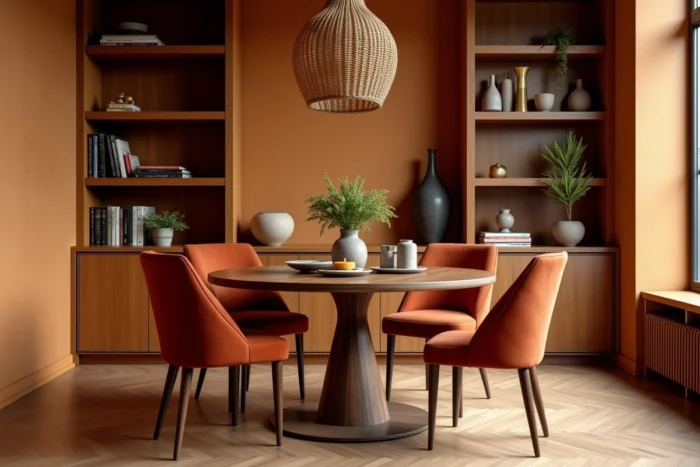
Warm color palette: terracotta, ochre, and sage green in a real interior
Cool palettes (pearl gray, off-white, glacier blue) have dominated interior decoration for years. The shift towards warm shades like terracotta, chocolate brown, ochre, or sage green is one of the most visible trends over the past two years.
In practice, applying these colors requires a minimum of method. You don’t paint four walls terracotta. You choose one, the one that receives the most natural light, and keep the others in a warm neutral tone (linen, cream, sand). This colored wall becomes the focal point of the room.
Combining colors without overwhelming
The simplest rule to apply: one dominant, one secondary, one accent. The dominant covers large surfaces (walls, floor). The secondary appears on the main furniture. The accent is limited to textiles and accessories.
- Dominant light sand + secondary sage green (sofa or curtains) + terracotta accent on cushions and a vase
- Dominant warm white + secondary natural wood (shelves, coffee table) + ochre accent on a throw and frames
- Dominant taupe gray + secondary olive (armchair, rug) + chocolate brown accent on a few decorative objects
Feedback varies on this point, but many decorators recommend testing the accent color with a removable object (cushion, candle, small painting) before committing to an entire piece of furniture.
Biophilic decoration: integrating plants without turning your living room into a greenhouse
Biophilic decor, meaning the integration of plants and natural elements into the living space, has been identified as the fastest-growing trend in recent years, particularly in urban apartments.
The classic pitfall: buying twelve plants at once, placing them on every available surface, and then watching them die one by one due to lack of proper care. The effective approach is more targeted.
Three placements that change the ambiance of a room
A tall plant (ficus, bird of paradise) in an empty corner creates a vertical anchor point. There’s no need to place them everywhere: a single well-sized plant has more impact than six small pots on a shelf.
Trailing plants on a high shelf or elevated furniture add movement. Pothos or scindapsus are hardy and tolerate medium lighting.
Maximizing natural light is part of the biophilic approach. Replacing opaque curtains with linen sheers, clearing window sills, using mirrors to reflect light into dark areas: these simple actions amplify the effect of the plants and transform the overall atmosphere.
Designing a small space: multifunctional furniture and circulation
In a studio or small apartment, decor cannot be thought of independently from layout. Every piece of furniture must justify its presence through its function and visual contribution.
An entryway bench with integrated storage replaces both the wall-mounted coat rack and the shoe box. A piece of furniture that serves two functions frees up floor space and visual load. Extendable tables, beds with drawers, open shelving partitions: these solutions are not new, but they remain underutilized.
Circulation and perception of space
Decorating a small space isn’t just about choosing objects. It’s about what you remove. An unobstructed passage between the door and the main window creates a sense of depth that three well-chosen pieces of furniture cannot compensate for if they block the view.
- Maximize floor clearance: high-legged furniture, wall storage, nothing placed directly on the floor in passage areas
- Use mirrors facing a light source to visually double the depth
- Limit colors to two or three close shades to visually unify the space and avoid fragmentation
Panoramic wallpaper with a perspective pattern (forest, architecture, landscape) is an option that frequently appears in small space projects. Placed on a single wall, it creates a remarkably effective illusion of depth.
Enhancing an interior doesn’t require a substantial budget or a complete overhaul. A wall repainted in sage green, a well-placed tall plant, a natural fiber rug replacing synthetic carpet: three precise interventions are enough to radically change the perception of a room.
The best starting point is often the simplest: identify what evokes no emotion and replace it with something that has texture, color, or relief.