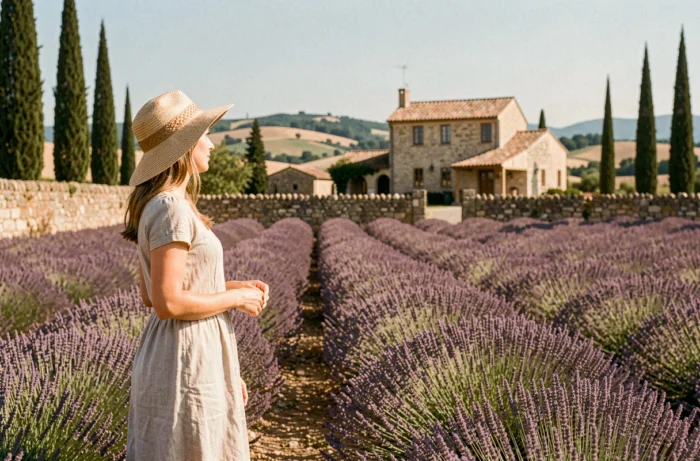
France has no shortage of destination lists. What is lacking are selection criteria that take into account real constraints: tourist pressure, car-free access, and the seasonality of natural environments. Choosing a destination in France for a successful vacation means balancing the appeal of a landscape with its capacity to accommodate visitors during the targeted period.
Access conditions and flow management at French natural sites
The most sought-after nature destinations in France now apply seasonal access restrictions. At certain natural sites, prior reservation is required for entry during peak months. This is no longer a minor issue: this constraint alters travel planning.
The Écrins National Park conducted a study in 2025 mapping visitor flows and their seasonal variations, cross-referenced with the presence of sensitive species and environments. An experimental model even seeks to predict trail congestion two weeks in advance by integrating weather data. This type of data, still rare, is beginning to guide the management of mountain trails.
For travelers, this means that a national park or nature reserve can no longer be visited spontaneously in summer. We recommend systematically checking access conditions before booking accommodation, especially for nature destinations in high season. A practical guide listing regulations by destination is available at touriste.fr, which helps avoid unpleasant surprises upon arrival.

France destinations in the low season: an underestimated lever
The low season is no longer just a budget issue. The Banque des Territoires describes de-seasonalization as a way to spread visits, reduce pressure on environments, and stabilize local economic activity. Specifically, a destination like inland Provence or Quercy offers a radically different experience in April or October compared to July.
This seasonal shift changes the very nature of the trip:
- The villages in southern France regain their local rhythm, with less crowded markets and artisans more available for interaction
- Mountain trails at mid-altitude (Aubrac, Morvan, Livradois-Forez) are accessible from spring without the constraints of summer capacity
- Characterful accommodations, often fully booked in summer, offer more affordable rates and better availability
Planning a vacation in France in spring or autumn is not a compromise. It is a choice that opens up otherwise inaccessible or overcrowded destinations.
Last mile: the transport that makes or breaks a destination
Access to the last mile distinguishes an appealing destination from a truly feasible stay. The Banque des Territoires emphasizes the importance of rail transport, as well as local mobility solutions to connect the train station and the place of stay. This point remains the neglected aspect of travel guides.
An island like Molène, in Finistère, requires a maritime crossing from the mainland. The villages in the Var hinterland or the Bénou plateau in Béarn are not served by any regular public transport. For these destinations, the car remains the only realistic option off-season.
Conversely, some regions combine a dense rail network with seasonal local shuttles. Northern Brittany (Pink Granite Coast, Saint-Malo) or the Basque coast benefit from TGV connections and regional bus lines that make car-free travel feasible. Identifying this criterion before choosing a destination helps avoid turning a nature stay into a logistical nightmare.

French destinations by type of landscape: combining desire and feasibility
Rather than piling up place names, choosing a destination benefits from cross-referencing the type of landscape sought with the operational constraints mentioned above.
Coast and islands
The calanques between Marseille and Cassis, the Côte Bleue, or the Breton islands offer some of the most spectacular coastal landscapes in Europe. The trade-off: these sites impose capacity limits or access restrictions in summer. A stay in May or September allows you to enjoy the sea without the summer pressure.
Mountain and natural parks
The Mercantour, the Écrins, or the Bavella needles in Corsica are demanding mountain destinations. Altitude, weather conditions, and distance from train stations require serious logistical preparation. For a first trip to the mountains, mid-altitude parks (Morvan, Livradois-Forez) offer a compromise between change of scenery and accessibility.
Villages and heritage of the interior
Périgord, Quercy, or Aubrac concentrate remarkable built heritage in landscapes of causses and plateaus. These regions in the heart of France are particularly suited for family vacations, with short distances between sites and a well-structured rural accommodation offer.
- Périgord: exceptional density of prehistoric sites and classified villages, accessible from Bordeaux or Brive
- Quercy: causses, rivers, and medieval architecture, low visitation even in summer
- Aubrac: vast pastoral spaces, strong local gastronomy, ideal for hiking from spring to autumn
Choosing a destination in France for memorable vacations is not limited to the beauty of the landscape. The timing, mode of transport, and access conditions to the site weigh as heavily as visual appeal. Checking these parameters in advance transforms a travel project into a truly successful stay.