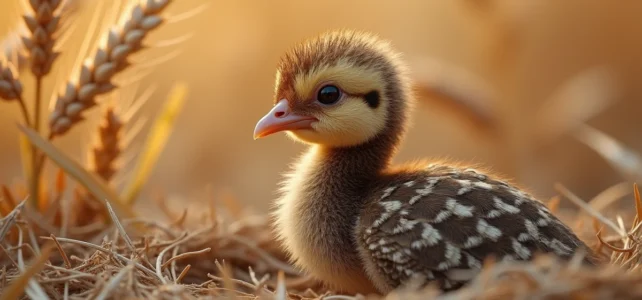
In the field, when collecting pheasant eggs in an incubator or monitoring a brooding hen in an aviary, the real challenge begins after hatching. The chick that emerges from the shell is nothing like a songbird fledgling: it is already on its feet, eyes open, ready to leave the nest. Understanding this particularity completely changes the way the first weeks are managed.
Nidifuge pheasant chick: what it implies from the first hours
The young pheasant is nidifuge from hatching. Specifically, within a few hours, it leaves the nest and starts moving on its own. For a breeder, this means that the brooder must be ready even before the eggs show the first signs of pipping.
A heated, dry space with clean bedding and a localized heat source is prepared. The female, in natural conditions, quickly guides her young out of the nest to limit exposure to predators. In breeding, this logic is replicated by avoiding confining the chicks in too small a space.
A detailed article on the development of the young pheasant allows for visualization of each step of this rapid growth. The priority remains the same everywhere: stable heat, immediate access to water and food, and enough space for the pheasant chicks to move freely.
Feeding the pheasant chick: the shift from animal to plant proteins
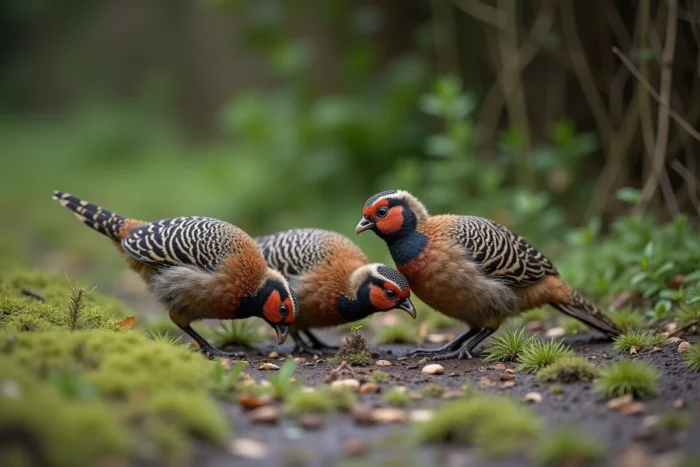
In the first days, the diet of the young pheasant relies almost exclusively on animal proteins: insects, spiders, small worms. This is a point that many guides gloss over, but in practice, it is the factor that makes a difference in the survival rate during the first weeks.
In breeding, this is compensated with a high-protein game starter feed. In the wild, the female leads her young to areas rich in invertebrates (hedge edges, wet meadows, forest edges).
Gradual dietary transition
As the pheasant chick grows, its diet evolves towards an increasing share of plant matter. This shift is observed over a few weeks: seeds, shoots, and berries gradually replace insects. In an aviary, adjustments are made by introducing seed mixes and fresh greens alongside the complete feed.
- First days: insects, larvae, spiders, supplemented with a high-protein starter feed
- Second to third week: gradual introduction of fine seeds, tender greens, small plant fragments
- From one month: mixed diet with a plant-based predominance, still with an opportunistic share of animal proteins
If this initial phase rich in proteins is neglected, feather growth and muscle development lag behind. Pheasant chicks lacking proteins at the start remain more fragile for a longer time.
First flights of the pheasant: early but partial independence
Around ten to twelve days, young pheasants begin their first flight attempts. This is remarkably early compared to many other birds. In practice, this means that an open-top aviary without netting becomes a problem as early as the second week.
These first flights remain short and clumsy. The pheasant chick is not yet independent: it still depends on collective warmth or a heat source, and its feeding remains partially assisted. Early flight does not mean independence.
Feather growth and flight capability
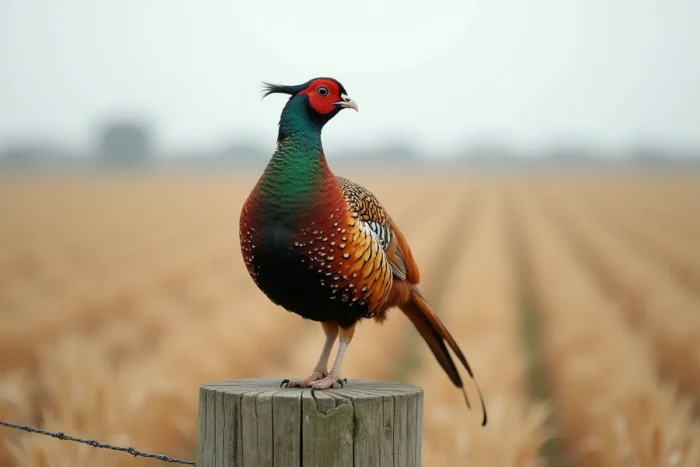
The down from hatching is quickly replaced by the first contour feathers. The juvenile plumage develops gradually, and the male-female distinction only appears much later. The adult male sports a much more colorful plumage than the female, but at the juvenile stage, both sexes look very similar.
In an aviary, the height of the net and the structure of the enclosure are adjusted over time. A low perch, placed from the third week, encourages wing muscle development without risk of injury.
Survival of the young pheasant: the bottleneck between hatching and independence
Juvenile mortality in pheasants is very high. Between predators (birds of prey, foxes, mustelids, corvids), unfavorable weather conditions, and nutritional deficiencies, the majority of losses occur in the very first weeks of life.
In breeding, some of these factors are controlled, but vigilance remains constant. Returns vary on this point depending on the facilities: some breeders in heated brooding obtain good results, while others in natural breeding with an adoptive hen experience more random losses.
Mortality factors to monitor
- Excessive humidity in the brooder, which promotes respiratory diseases and mycoses
- Temperature too low or poorly distributed, causing crowding and suffocation
- Predation in outdoor aviaries, particularly by rats and small mustelids that pass through too wide mesh
- Deficiency in animal proteins during the first week, hindering growth and feathering
In the wild, the female plays a direct protective role. She covers her young at night, warns them of dangers with specific calls, and guides them to feeding areas. Without this presence, the survival rate of released young pheasants drops significantly.
The period between hatching and real independence, a few weeks later, concentrates almost all the risks. After this point, young pheasants become more resilient, their plumage ensures better thermoregulation, and their escape ability (flight, running) partially protects them from terrestrial predators. Everything hinges on this narrow window where food, heat, and protection must converge.