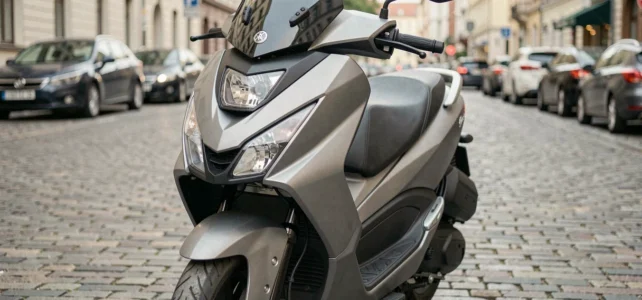
The XMAX 125 equipped with the Blue Core Euro5+ engine delivers a power of about 12.2 to 12.5 hp depending on measurements, well below the regulatory ceiling of 15 hp imposed on the category. This gap between actual power and legal limit fuels discussions about derestriction, but it masks a technical point that we consider crucial: the reserve of torque available for transitional phases, not the top speed.
Power Reserve of the XMAX 125 in Overtaking Situations
An original XMAX 125 reaches its maximum speed in level flight at an already highly stressed engine speed. The problem does not lie there. It arises when the rider needs to accelerate from a stabilized speed to overtake a vehicle on a two-lane road.
With two people on the scooter, including a passenger and possibly a loaded top case, the total weight increases significantly. The engine then operates close to its maximum power zone just to maintain speed. The remaining acceleration margin, which allows transitioning from cruising speed to a sufficient speed for safe overtaking, becomes very narrow.
We observe that most feedback converges on this finding: the real limit of the XMAX 125 is not its maximum speed but its ability to accelerate under load. On a fast road, a failed or prolonged overtaking exposes the rider much more than a momentary speeding violation.
An article detailing the maximum speed of the original or derestricted XMAX 125 confirms that the performance gap between the two configurations remains modest, reinforcing the idea that derestriction does not resolve this structural deficit of reserve.
Derestriction of the XMAX 125: What Reprogramming Really Changes
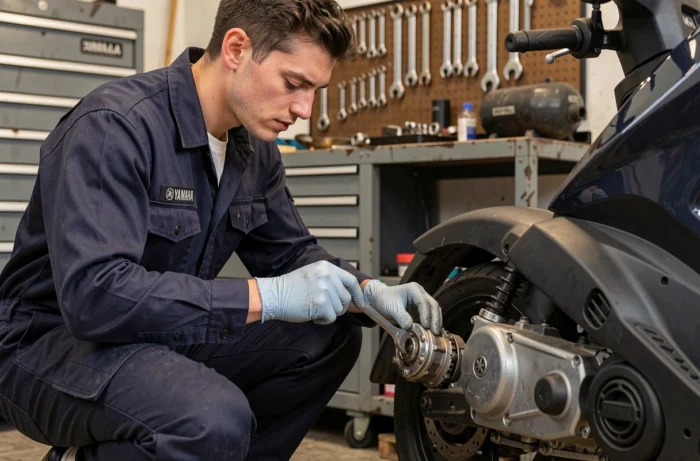
Derestricting a 125 cc generally involves intervening on the injection mapping (ECU reprogramming), modifying the variator, or replacing the exhaust. On the XMAX 125, the Blue Core architecture limits the actual gains achieved through these interventions.
Reprogramming the ECU allows for shifting the ignition and injection curves. The engine breathes better at high revs, and the cutoff occurs later. The result translates into a few extra km/h at top speed and a slightly widened power zone.
The gain in maximum speed remains limited on a single-cylinder 125. The laws of physics apply: aerodynamic resistance increases with the square of speed, and an engine of this displacement does not have the resources to compensate for this progression beyond a certain threshold.
What Changes Practically on Fast Roads
Derestriction gives the impression of a more responsive scooter at mid-rev. The solo rider finds additional comfort during accelerations. However, with two people and under load, the benefit quickly diminishes: the few extra horsepower do not compensate for the increased weight.
This is precisely the point that turns derestriction into a usage risk. The rider, accustomed to a better response when solo, engages in overtaking with a passenger relying on a power reserve that no longer exists. The danger does not come from the maximum speed reached, but from excessive confidence in an acceleration that collapses when two are on board.
Legal and Insurance Consequences of Derestricting 125
French regulations prohibit any modification that alters the technical characteristics recorded on the vehicle’s certificate of conformity. A derestricted XMAX 125 no longer corresponds to its original homologation, leading to several cascading effects.
- Cancellation of the manufacturer’s warranty: Yamaha can refuse any coverage as soon as an engine modification is detected, even on parts not affected by the intervention
- Nullification of the insurance contract in case of a claim: the insurer can invoke false declaration regarding the vehicle’s characteristics, leaving the rider without coverage for bodily and material damages
- Fine and immobilization of the vehicle during a roadside check, with an obligation to restore compliance before the registration document is returned
- In the event of a serious bodily accident, the rider’s criminal liability may be aggravated if derestriction is established as a contributing factor
We recommend considering these elements not as theoretical risks but as almost systematic consequences. Current diagnostic tools allow dealers and experts to detect an ECU reprogramming in just a few minutes.
XMAX 125 vs. XMAX 300: The Real Choice for Fast Roads
The recent evolution of the XMAX focuses more on comfort and equipment than on the raw power of the 125 engine. The Tech Max and Tech Max+ versions add features (connectivity, suspension adjustments, ergonomics) without changing the core issue: a single-cylinder 125 remains a single-cylinder 125.
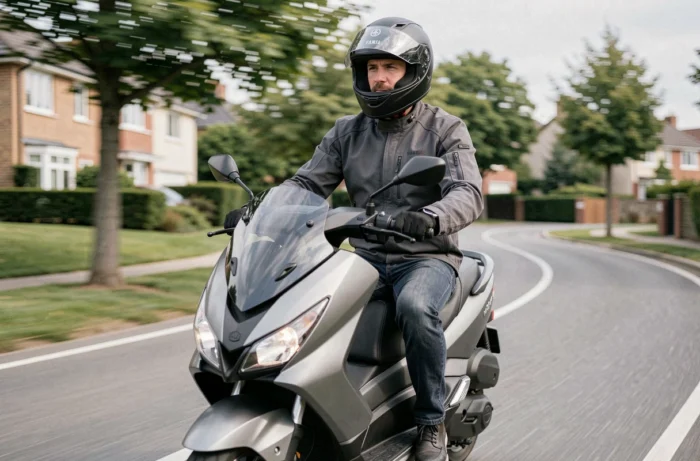
For regular use including stretches of fast roads and two-person transport, switching to the XMAX 300 accessible with an A2 license structurally resolves the reserve deficit. The chassis is almost identical, driving habits transfer directly, but the available torque margin radically changes the safety of overtaking.
The price gap between a derestricted XMAX 125 (purchase plus modification costs plus risk of premature engine failure) and a used XMAX 300 in good condition narrows significantly. The economic choice often leans in favor of the 300 when factoring in the real cost of derestriction, including the depreciation at resale of a modified scooter.
When the 125 Suffices
In strictly urban and suburban use, without a regular passenger, the original XMAX 125 fulfills its role perfectly. Its low consumption, agility in the city, and moderate maintenance costs make it a rational choice. Derestriction only makes sense if the use exceeds the native capabilities of the vehicle, and in that case, it is the vehicle that needs to be changed, not its mapping.
Derestricting an XMAX 125 provides a measurable gain but insufficient to change the nature of the scooter. A few extra km/h at top speed do not create the necessary power reserve for serene use on fast roads, especially with two people. It is better to adapt the engine displacement category to actual needs than to artificially push the limits of an engine designed for a different usage program.