
Preparing for retirement is not just about calculating a pension. Aging well at home means anticipating concrete changes in your housing, health, and daily life, sometimes several years before the actual departure. Administrative procedures have recently been digitized, new aids like MaPrimeAdapt’ are reshaping the landscape, and processing times remain a point of concern in several departments.
MaPrimeAdapt’: adapting your home before loss of autonomy
Have you ever noticed that a simple step between two rooms can become an obstacle after the age of 70? This is precisely the type of situation that MaPrimeAdapt’ aims to correct, before an accident occurs.
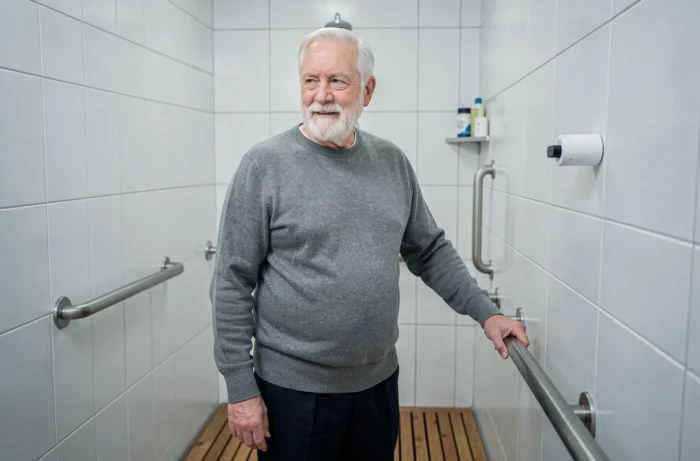
This aid specifically concerns people aged 70 and over, those aged 60-69 with recognized loss of autonomy, as well as certain individuals with disabilities. The principle: to finance adaptation work (replacing a bathtub with a shower, installing grab bars, widening doors) to enable home care.
One point that many applications overlook: the use of a specialized advisor is mandatory. This project management assistant assesses needs, guides the work, and monitors its completion. Without them, the application is not admissible. To better understand the solutions available for this transition, you can discover O Senior for retirement and the resources associated with home care.

Processing times: the trap of late adaptation
The goal of MaPrimeAdapt’ is to intervene before a fall or loss of autonomy. In practice, processing times can compromise this preventive logic.
Reports published in 2026 indicate delays that can reach several months depending on the departments. Specifically, a person who submits an application in the fall may not see the work begin until the following spring, or even later.
The consequence is direct: if the adaptation of the home occurs after hospitalization due to a fall, it loses its preventive character. The home then becomes a poorly equipped place for recovery rather than a secure space in advance.
Anticipating the submission of the application
The most effective strategy is to start the process as early as 68-69 years old, even if no particular difficulties are yet felt. The administrative process has been digitized and centralized, making online submission easier, but it does not necessarily shorten the processing time afterward.
- Gather proof of income and housing occupation before even contacting the advisor
- Request an ergonomic evaluation of the home to identify at-risk areas (bathroom, stairs, outdoor access)
- Plan for a supplementary budget: MaPrimeAdapt’ covers part of the work, rarely the entire cost
Health and daily autonomy: what happens after retirement
Adapting the home only addresses part of the equation. Maintaining autonomy also relies on lifestyle habits that are built from the first years of retirement.
Physical mobility is the primary protective factor against loss of autonomy. Walking for thirty minutes a day, practicing balance exercises, maintaining joint flexibility: these simple actions significantly reduce the risk of falling.
Why emphasize this point? Because sedentary behavior often sets in gradually after stopping professional activity. Commuting disappears, physical interactions decrease, and the range of movement shrinks.
Activities and social connections: two underestimated levers
Preventive activities offered by pension funds (memory workshops, adapted physical activity sessions, discussion groups) exist in most departments. They are often free or low-cost.
Social connections protect as much as physical exercise. Isolation accelerates cognitive decline and reduces the motivation to maintain one’s home or health. Participating in a collective activity, even weekly, maintains a rhythm and a reason to go out.
Home aids and services: identifying what exists before you need it
The common reflex is to seek assistance when difficulties arise. The problem: processing delays, lack of knowledge about available programs, and the stress of the situation make the procedures more complicated.
- The APA (personalized autonomy allowance) finances hours of home help for people with loss of autonomy, but its allocation requires a prior GIR assessment
- Housekeeping and meal delivery services can be requested from the town hall or CCAS well before a dependency situation arises
- CARSAT and complementary pension funds offer personalized action plans for home care, sometimes including financial aid for small adaptations
Knowing about these programs in advance allows for a calm application process, without medical or family emergencies in the background.
The adaptation offer remains significantly lower than the estimated needs in France. Adapting your home early remains the most protective decision for aging at home under good conditions. Aid exists, processes are simplifying, but the timelines require action before the need becomes urgent. An adapted home at 70 is a home that protects at 80.