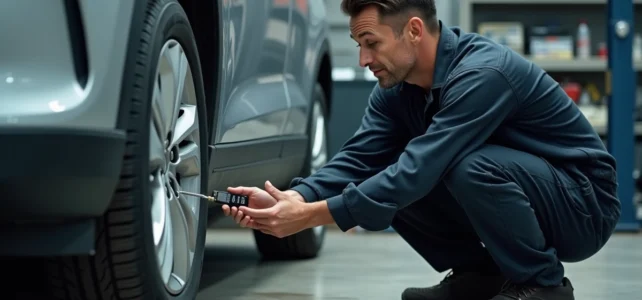
The tire pressure warning light comes on the dashboard of your Citroën C5, and the temptation to press a button to make it disappear is strong. The question to ask before any action: does this warning indicate a simple TPMS reference reset, or a physical issue with a tire that requires intervention at the garage?
Indirect TPMS or direct sensors: what your Citroën C5 uses depending on the generation
The reset procedure depends on the type of pressure monitoring system installed in your vehicle. Not all Citroën C5s have the same device, and confusing the two leads to unnecessary actions.
| C5 Generation | TPMS Type | Reset Method |
|---|---|---|
| C5 X7 / MK2 (2008-2017) | Direct sensors (valves equipped with sensors) | OBD diagnostic tool required |
| C5 X / MK3 (2021-2026) | Indirect TPMS (via ABS sensors) | Central screen or instrument cluster menu, then validation while driving |
On the C5 MK2, the presence of physical sensors in each valve complicates the reset. An OBD diagnostic tool connected to the port is often necessary to clear the error, which is why a simple button press is not sufficient on this generation.
On the C5 X (MK3), the system relies on ABS sensors that detect variations in rolling diameter. The reset is done through the vehicle menu, without external tools. This function is often referred to as “Set TPW” in PSA/Stellantis systems.
Before attempting to reset the tire pressure on the C5, first identify the generation of your vehicle and the associated TPMS type: the procedure directly follows from that.
Resetting tire pressure on Citroën C5: step-by-step procedure
Regardless of the model, one rule always applies: correcting the pressures always precedes the reset. Starting the reset procedure without having checked and adjusted all four tires when cold is like asking the system to memorize incorrect values. The warning light will return.
Checking and inflating when cold
The reference pressure is found on the sticker affixed to the driver’s door pillar. This number varies depending on the engine and load of the vehicle. Check all four tires (including the spare if it exists) with a reliable pressure gauge, after at least two hours of standing still.
Procedure for the C5 X (MK3, indirect TPMS)
- Turn on the ignition without starting the engine, access the “Vehicle” menu on the central screen or instrument cluster
- Select “Tire Pressure” then “Initialize” or “Set TPW” depending on the software version
- Confirm the reset, then drive for a few minutes for the system to validate the new references
The warning light may stay on for the first few kilometers. This is normal: the indirect TPMS needs driving data to recalculate the reference diameters.
Procedure for the C5 X7 (MK2, direct sensors)
Manipulation from the cabin is generally not sufficient. You need to connect a compatible diagnostic tool to the OBD port, located under the dashboard on the driver’s side. The tool allows you to read the sensors, check their status, and initiate the learning procedure. A visit to a garage or a specialized auto technician with the right equipment is often the quickest solution for this generation.
Tire pressure warning light persists after reset: diagnosing the real causes
This is the point that most tutorials skim over. The TPMS reset does not fix a physical defect. If the warning light comes back on after a few kilometers despite a correctly executed procedure, the problem lies elsewhere.
Several causes should be checked before concluding an electronic malfunction:
- A slow leak, sometimes invisible to the naked eye, causing the pressure to drop gradually on a single tire
- A damaged valve or a worn seal, causing intermittent air leakage
- A bulge on the sidewall of the tire, altering the rolling diameter detected by the indirect TPMS
- An inappropriate set pressure for actual use (loaded vehicle, prolonged highway driving)
On the C5 X7, a faulty valve sensor can also explain a persistent warning light. The internal battery of direct TPMS sensors has a limited lifespan, and a sensor nearing the end of its life sends erratic data to the computer.
Adjusting the reference pressure according to load and vehicle use
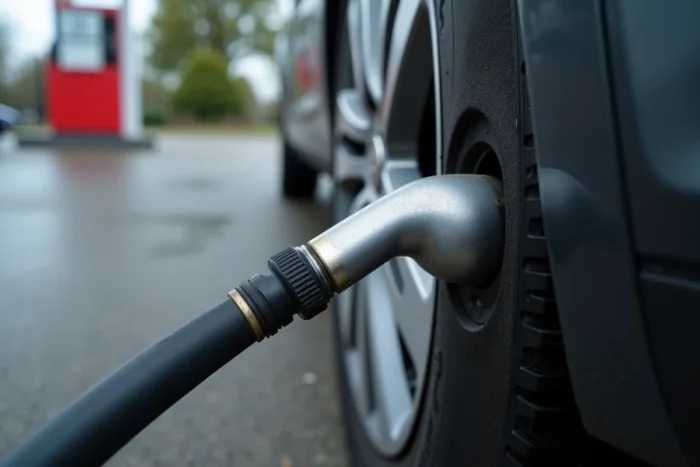
An often overlooked aspect: the TPMS memorizes a reference pressure at the time of reset. If you initialize the system with the vehicle empty, then load the trunk for a vacation trip, the pressure difference may be enough to trigger the warning light.
Manufacturer manuals specify that the reset should be relaunched when the usual load changes significantly. In practical terms, this means resetting after adjusting the pressure to the “full load” values indicated on the door pillar, before a long trip.
This logic also applies to seasonal tire changes. Switching from summer tires to winter tires alters the rolling characteristics. On an indirect TPMS, the system may interpret this change as an anomaly if it has not been reset with the new properly inflated tires.
The tire pressure warning light on a Citroën C5 is merely a messenger. Clearing the message without addressing the cause is like ignoring a warning signal. Check first, adjust next, reset last. If the warning light returns after this sequence, the problem is physical, not software-related.