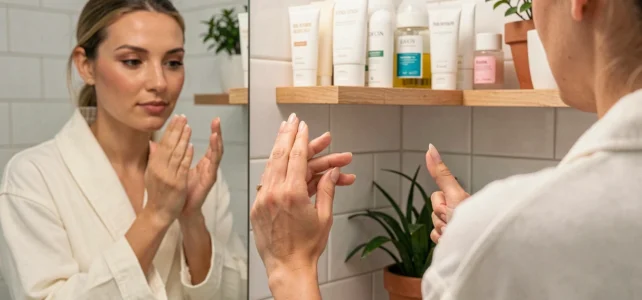
Beauty in everyday life relies on precise biological mechanisms: cellular renewal, balance of the hydrolipid film, protection against oxidative stress. Understanding these fundamentals allows for the construction of an effective beauty routine, tailored to one’s skin and lifestyle, rather than multiplying products without coherence.
Hydrolipid film and skin barrier: the foundation of effective facial care
The hydrolipid film is a natural emulsion made up of sebum, sweat, and water that covers the surface of the skin. Its role is twofold: to limit transepidermal water loss and to protect against external aggressions (pollution, UV, friction).
Too aggressive cleansing, such as with sulfate surfactants, degrades this barrier. The skin feels tight, reddens, and produces more sebum to compensate. A gentle cleanser preserves the hydrolipid film and reduces skin reactivity in a few weeks.
The moisturizer acts as a complement, not a replacement. It provides occlusive agents (which slow down evaporation) and humectants (which attract water in the upper layers of the epidermis). Applying a cream on poorly cleansed or deeply dehydrated skin limits its effectiveness. The order of steps is as important as the choice of products.
Specialized resources like secretdebeaute.net detail these mechanisms and help identify the active ingredients suited to each skin type.
Makeup routine: choosing products according to skin tone and texture
Makeup enhances the face when it works with the skin, not against it. Foundation, for example, should match the skin’s undertone (warm, cool, or neutral) rather than the desired color. A wrong undertone creates a visible mask effect in natural light.
Lips and eyes: the areas that structure the gaze
The lips and eyes capture the majority of visual attention during an interaction. Focusing on these two areas is often enough to transform a face without heavy makeup.
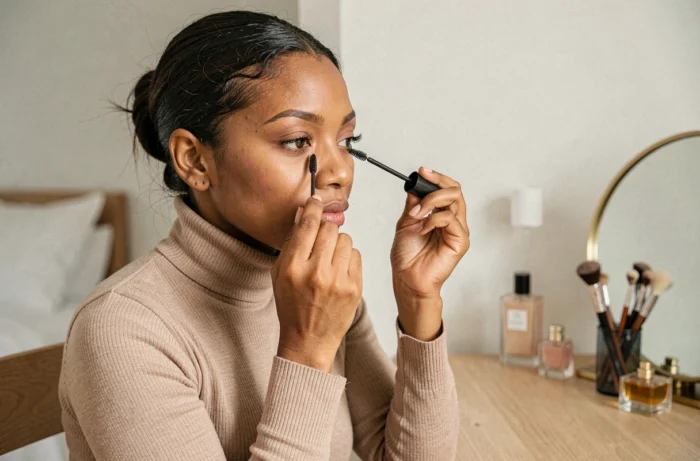
- For the eyes, applying mascara in a zigzag motion from the root of the lashes opens the gaze more effectively than poorly blended eyeshadow. Warm shades (brown, copper) suit golden undertones, while cool shades (taupe, plum) suit rosy undertones.
- For the lips, a pencil slightly darker than the lipstick redefines the contour without an artificial effect. Matte textures last longer but can dry out thin lips. A tinted balm offers a comfort-color compromise.
- Blush, applied on the top of the cheekbone (not in the hollow), enhances the face’s radiance and creates a natural healthy glow.
The current trend favors lightweight and buildable textures. Full-coverage foundations are giving way to tinted treatments that allow the skin’s natural texture to show through.
Sleep and diet: two often underestimated beauty levers
The skin primarily regenerates during sleep, particularly during deep sleep phases. Cellular renewal accelerates, and collagen production increases. A chronic lack of sleep accelerates visible skin aging: pronounced dark circles, dull complexion, loss of elasticity.
Diet affects skin radiance through another mechanism. Antioxidants (found in colorful fruits, green vegetables, and nuts) neutralize some of the free radicals responsible for cellular oxidative stress. Polyunsaturated fatty acids, particularly omega-3s, contribute to the flexibility of the cell membrane.
Internal hydration completes the system. Dehydrated skin from the inside cannot be repaired solely with a cream. Water aids in transporting nutrients to skin cells and eliminating metabolic waste.
Cosmetic allergens and product reformulation: what changes from 2026
European regulations have significantly expanded the list of fragrance allergens that must appear on cosmetic labels. Regulation (EU) 2023/1545 now mandates the declaration of 81 allergenic substances, up from 24 previously. From July 31, 2026, new non-compliant products can no longer be marketed.
This evolution affects all cosmetic products sold in the European Union: facial care, body creams, perfumes, organic products. For consumers with sensitive skin or prone to contact allergies, reading the INCI list becomes a reflex to integrate into their beauty routine.
Long-lasting products and the ban on PFAS
In parallel, France has initiated an action plan on PFAS (per- and polyfluoroalkyl substances), published in April 2024, leading to the reformulation of many long-lasting makeup products. Foundations, waterproof mascaras, and long-lasting lipsticks are particularly affected.
These substances provided water resistance and long-lasting properties. Their gradual removal alters the performance of certain products. Brands are reformulating with alternatives, but results vary. Testing a reformulated product before adopting it into your routine helps avoid disappointments.

Hair and body: extending the routine beyond the face
Hair undergoes the same environmental aggressions as the skin. Pollution deposits fine particles on the hair fiber, dulling color and weakening the cuticle. A cold rinse after shampooing closes the scales and improves shine.
The scalp deserves as much attention as the face. It is a skin in its own right, with its sebaceous glands and microbiome. A gentle scrub once a week removes residues from styling products and stimulates microcirculation.
For the body, applying a moisturizing treatment on still damp skin improves the absorption of active ingredients. The driest areas (elbows, knees, heels) benefit from richer formulas, based on shea butter or ceramides.
The most sustainable beauty tips are those based on understanding one’s skin rather than accumulating products. A routine of three to four well-chosen treatments, combined with regular sleep and a balanced diet, yields more visible results than a cluttered bathroom shelf.