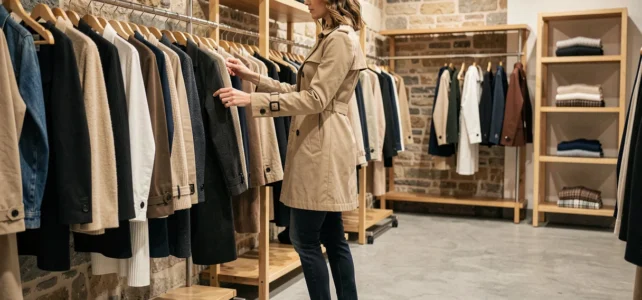
The Parisian style is not just about a wardrobe. It’s a relationship with clothing that prioritizes cut, material, and the coherence of a wardrobe over the accumulation of trendy pieces. Understanding what structures this style allows for more precise shopping choices, whether living in Paris or preparing for a fashion stay in the capital.
Upgrade of Parisian shopping streets: what’s changing for fashion shopping
Since 2025, the major shopping streets of Paris (Champs-Élysées, rue Saint-Honoré, Triangle d’Or) have been experiencing a structural upgrade. According to Knight Frank, nearly 30% of the brands present on these streets are now international, which alters the very identity of Parisian shopping.
This reconfiguration has a direct effect on the available selection. About thirty luxury boutiques opened in 2025, and already a dozen in the early months of 2026. The commercial fabric is becoming more premium, more global, and French independent brands must distinguish themselves with a sharper positioning.
At the same time, foot traffic in luxury boutiques in Paris declined by 11.3% in the first half of 2026 compared to 2025, according to the Sensormatic index reported by Le Monde. The houses that are holding strong (Dior, Chanel, Hermès, Polène) are those whose brand universe remains very identifiable. For those looking to build a Parisian style, exploring the shopping selections of Mode in Paris allows for spotting pieces from this local creative fabric, beyond the large international brands.
Parisian wardrobe: the selection criteria that matter
The most common reflex is to list boutiques by neighborhood. This approach masks the real question: on what criteria should one choose a piece so that it fits into a coherent wardrobe?
Cut takes precedence over trend
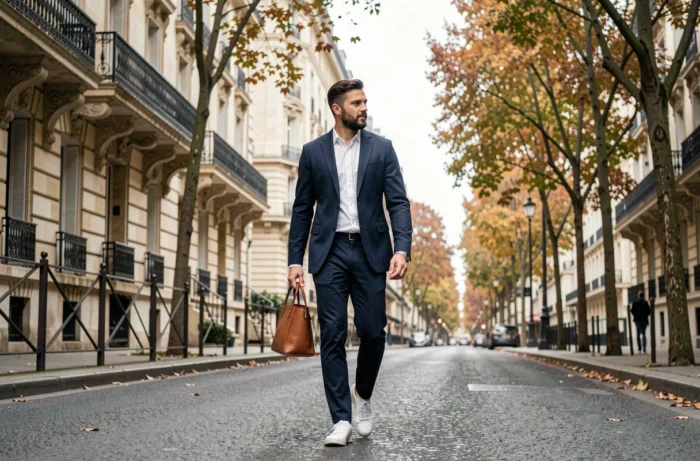
A jacket with shoulders that fall in the right place, trousers whose hem grazes the shoe without breaking: these cut details do more for a Parisian style than a seasonal print. Parisian concept stores like The Broken Arm or Merci select their pieces based on this criterion above all.
Material dictates longevity
A thick cotton, a non-blended wool, full-grain leather ages better than a synthetic fabric with an appealing finish. The Parisian style relies on pieces that gain character over time. The reflex to touch the fabric before buying remains the best filter, whether in a vintage shop or at a designer’s.
The restricted palette
The most effective Parisian wardrobes revolve around five to seven colors that complement each other. Black, navy, ecru, gray, off-white form a base. One or two more pronounced shades (a burgundy, a fir green) punctuate the whole without throwing it off balance.
- Check that each new piece matches at least three existing garments in the wardrobe
- Favor straight or slightly fitted cuts that transcend seasons without being trendy
- Test the material in natural light, as store lighting flatters synthetic textiles
Vintage and second-hand in Paris: a circuit in its own right
The Parisian second-hand market is not limited to the Puces de Saint-Ouen. It forms a structured circuit, with specialized players whose selection is as rigorous as that of a concept store.
The thrift shops in Haut Marais (Kilo Shop, Guerrisol in northern Paris) offer large volumes at low prices but require time to sift through. In contrast, stores like Re-See practice a luxury consignment with authentication and strict curation of pieces. The entry price is higher, but the selection is more immediate.
Maison Deux Mains, a Parisian brand that works with deadstock (unsold fabrics from fashion houses), illustrates a recent trend. Rather than reselling vintage, these labels create new pieces from existing materials. The result combines the appeal of newness with the rarity of original materials.
Parisian concept stores: how to read a fashion selection
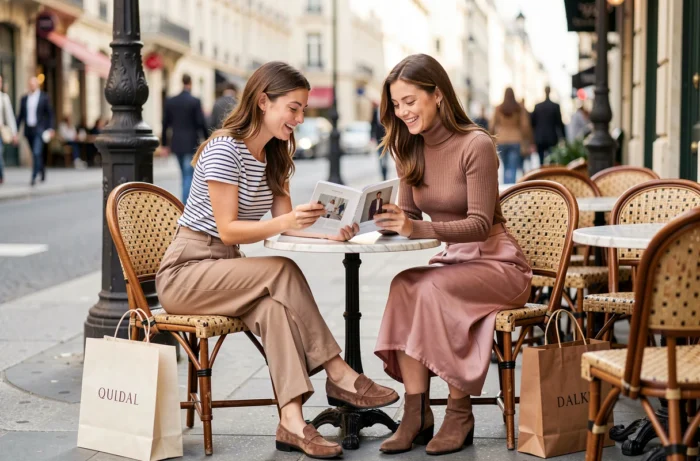
A concept store is not a classic multi-brand shop. The difference lies in the editorialization: each piece is chosen to fit into a global stylistic vision. This is what gives places like The Broken Arm (Haut Marais), Holiday Boileau (16th arrondissement), or À Rebours (Marais) their reputation.
To take advantage of these selections, one must understand their logic. A concept store that mixes furniture, perfumes, and clothing in the same space seeks to define a lifestyle. The fashion pieces are selected for their coherence with a universe, not just for their market value.
- Observe the associations proposed in the window or on the rack: they reveal the proportions and color combinations favored by the artistic director
- Spot the recurring brands from one season to the next, a sign of a sustainable partnership and trust in quality
- Ask about the story of a piece: concept store sellers generally know the manufacturing process and material choices
Coach has just opened a “Coach Play” space in the Marais, with a retail concept designed around experience rather than simple sales. This type of hybrid format is multiplying in Paris and blurring the lines between shop, gallery, and living space.
Parisian spring-summer trends: what style offices anticipate
Peclersparis, a French trend office, is already working on the spring-summer 2028 fashion directions. The trends emerging for the upcoming seasons confirm a fundamental movement: natural materials and fluid silhouettes are gaining ground over structured sportswear.
The collective Collectivo, noted during the autumn-winter 2026-2027 presentations, pushes this logic by offering gender-neutral pieces with ample volumes, made from recycled fibers. This type of approach, still confidential, is beginning to influence the selections of the most advanced Parisian concept stores.
The Parisian style is not fixed. Its strength lies in its ability to absorb these influences without losing its guiding line: sobriety, textile quality, mastered cut. Choosing pieces by applying these three filters remains the most reliable way to build a wardrobe that endures over time.