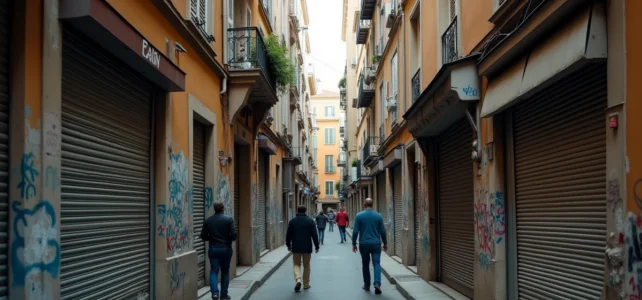
Are you preparing a move or a stay in Montpellier and wondering which areas deserve special attention? The city is appealing due to its climate, heritage, and student life. However, like any large urban area, some neighborhoods experience more crime than others. Understanding these disparities allows for informed choices, whether for housing, nightlife, or daily commutes.
Montpellier and the recent rise in crime: what older guides don’t mention
Most online content about safety in Montpellier relies on outdated data, often from a 2020 news article. Since then, the situation has evolved. The recent trend shows a documented increase in crime, which changes the perception of certain neighborhoods.
This evolution does not mean that the entire city has become dangerous. It means that areas already identified as sensitive are experiencing even more incidents, and new points of tension are emerging, especially at night. A real estate guide written five years ago does not capture these changes. To better understand the hot neighborhoods of Montpellier, it is necessary to cross-reference recent official data with feedback from residents.
Another rarely mentioned element: the municipality is deploying a strategy to rebalance towards the west of the city, with the planned creation of a “Security Hotel” in Celleneuve. This future site is expected to host about 240 state officials (police, justice, associated services) to strengthen institutional presence in a sector that has long been under-resourced.
The Mosson and Celleneuve: sensitive urban areas in Montpellier
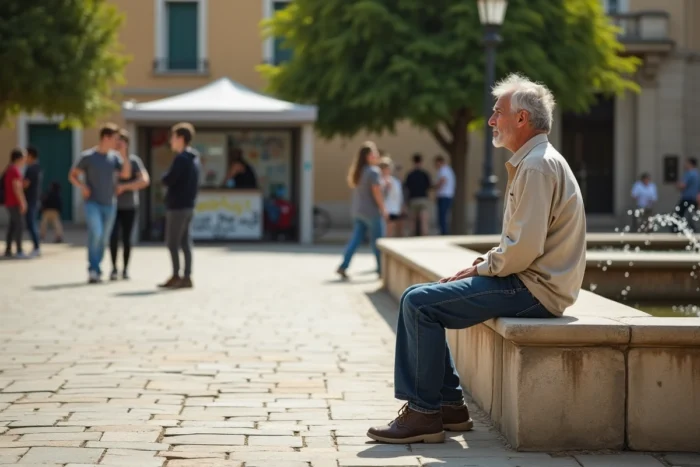
Have you heard of the Mosson neighborhood? It is the area most often mentioned when discussing safety in Montpellier. It accounts for a significant share of the municipality’s crime: trafficking, incivilities, tensions between groups.
The Mosson includes several sub-neighborhoods (Petit Bard, Grande Borne, Hauts de Massane) where living conditions vary greatly from street to street. The issue does not lie with the entire neighborhood but with specific micro-zones. One building may be quiet while the neighboring parking lot experiences disturbances.
Celleneuve, right next door, shares some difficulties. The area around the Assas tower frequently comes up in reports. This is precisely where the city hall plans to establish its security hub, on a former slum site. The stated goal is to coordinate security actors directly on-site rather than multiplying occasional interventions from the city center.
What to check before settling in these areas
- The immediate proximity to identified drug dealing points, often reported by residents on local groups and forums
- The public lighting and the condition of the common areas of the building, reliable indicators of the maintenance level of the property
- The frequency of public transport in the evening, as nighttime isolation exacerbates the feeling of insecurity
Nighttime safety in downtown Montpellier: Place de la Comédie and surroundings
The historic center, around the Écusson and Place de la Comédie, attracts thousands of people every evening. This high foot traffic generates a different type of crime: pickpocketing, alcohol-related assaults, scams.
After a certain hour, the pedestrian zone changes its character. The narrow streets of the Écusson, charming during the day, become less reassuring after midnight, especially in the poorly lit alleys between Place Jean-Jaurès and the Saint-Roch neighborhood.
The Peyrou park, appreciated for its view during the day, is also one of the places to avoid at night. Isolated benches and dense vegetation create blind spots conducive to unpleasant encounters. This observation also applies to certain sections along the Lez, where lighting remains insufficient.
Adopting the right reflexes when going out at night
Favor well-lit main thoroughfares. Avoid crossing Peyrou park or the banks of the Lez alone after 11 PM. Stay on busy commercial streets where human presence remains constant. The tram stations in the center are generally safe, but the end-of-line stops require more caution.
Changing neighborhoods: Figuerolles, Gambetta, and the village of Saint-Martin
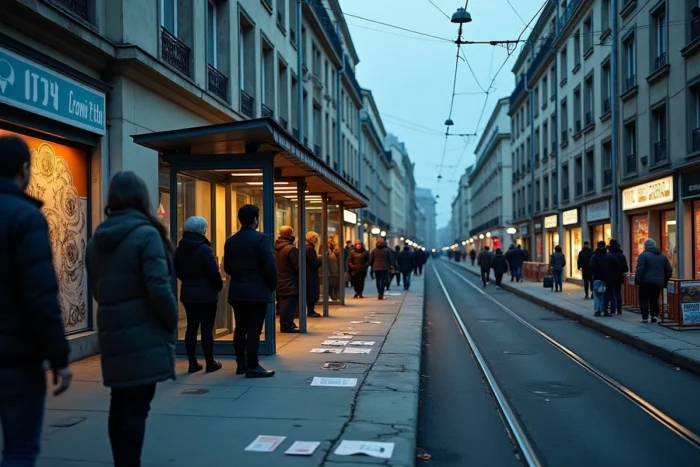
Figuerolles exemplifies the complexity of Montpellier. This working-class neighborhood, close to the center, is undergoing gradual gentrification. Alternative shops and restaurants are opening, but tensions related to trafficking persist in some adjacent streets.
Gambetta is following a similar trajectory. The Plan Cabanes market enlivens the neighborhood during the day. In the evening, some areas remain less desirable, particularly near Rue du Faubourg-du-Courreau.
The village of Saint-Martin-de-Londres, sometimes confused with the urban neighborhood of Saint-Martin, is entirely different. However, the Près d’Arènes area, south of the center, also sees regular reports. The proximity to Saint-Roch station generates a flow of traffic that fosters petty crimes.
- Figuerolles: overall improvement, but pockets of tension remain near Boulevard Renouvier
- Gambetta: lively during the day, to be monitored in the evening on secondary streets
- Près d’Arènes: increased vigilance around the station, especially for luggage and personal belongings
Montpellier remains a city where the vast majority of neighborhoods are experienced without particular difficulties. The problematic areas are identified, and for some, they are the subject of active public policies. Choosing your neighborhood with awareness remains the best protection. A reconnaissance on-site, at different times of the day, is always better than an opinion read online.