
Small black or brown insects swarming along your baseboards, under the sink, or in the pantry: the ophones often settle in without warning. These discreet beetles take advantage of the slightest crack to colonize damp rooms and dark corners. Understanding their behavior and acting in the right places makes all the difference between a temporary nuisance and a lasting infestation.
Why ophones enter the house in waves
Have you noticed that these insects seem to appear all at once? It’s not a coincidence. Ophones normally live in the garden soil, under stones and plant debris. They feed on decomposing organic matter and small invertebrates.
During episodes of extreme heat or prolonged rain, their natural habitat becomes inhospitable. The soil dries out or becomes waterlogged, and ophones seek a more stable shelter. Your home offers exactly what they are looking for: a constant temperature, residual humidity, and quiet areas.
The entry points are often the same: poorly fitted door thresholds, worn window seals, unsealed cable conduits, or cracks in the foundations. A gap of just a few millimeters is enough for them. That’s why knowing what to do in the face of a home invasion of ophones starts with a careful examination of the building before thinking about products.
Industry professionals also confirm that building treatment (cracks, seals, ventilation) surpasses the effectiveness of insecticides alone. A chemical product kills the individuals present, but if the passage remains open, new ophones will arrive the following week.
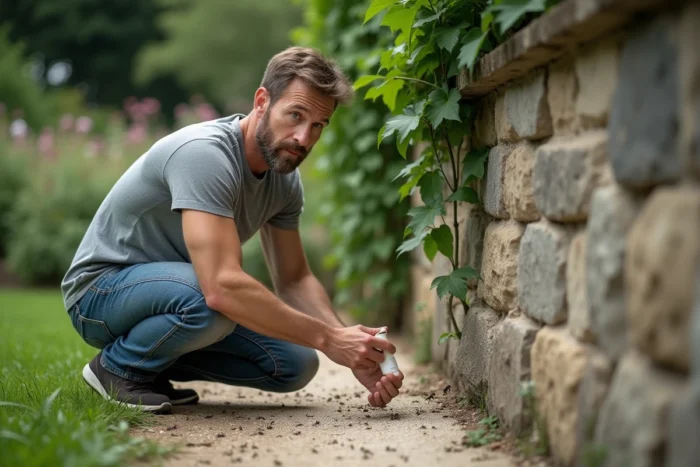
Sealing access points: the method that addresses the problem at its source
Before spraying anything, take a flashlight and inspect each affected room. Follow the baseboards, check the door frames, technical conduits, and plumbing entries.
Priority points to check
- Entry and garage door thresholds: a brush seal or automatic baseboard fills the space under the door and blocks the passage of crawling insects.
- Silicone seals around windows and vents: over time, they shrink and leave micro-openings. A tube of silicone sealant is enough to redo them.
- Wall penetrations (electrical cables, pipes, ventilation systems): an expanding foam plug or fireproof sealant closes these passages without interfering with installations.
- Cracks in the foundation: an exterior patching mortar prevents ophones from following the foundation to enter the house.
This sealing work takes half a day for an average house. The results are visible within the first week, as you eliminate the influx instead of chasing after each insect.
Reducing humidity and sources of attraction
Ophones only stay if the conditions suit them. Two factors keep them: humidity and organic matter.
In the kitchen and bathroom, check that no pipes are leaking. Even a minor leak under a sink creates a permanent damp area that attracts these beetles. Fixing a micro-leak often eliminates the main breeding ground without any chemical treatment.
In the basement or pantry, an electric dehumidifier keeps the humidity level below a threshold that discourages ophones. Daily airing of poorly ventilated rooms also helps, provided that the openings are fitted with fine mesh screens.
Regarding organic matter, indoor compost bins, open bags of potting soil, and wood stored against an interior wall are magnets for ophones. Move these items away from the house or place them in closed containers.
Natural treatments and insecticides against ophones
Once the access points are sealed and humidity is controlled, there may still be individuals trapped inside. This is the time to act directly on them.
Diatomaceous earth: the mechanical trap
Diatomaceous earth is a mineral powder made from fossilized microalgae. Its microscopic particles abrade the waxy cuticle of insects, causing dehydration. It works without active chemical substances, making it usable in a kitchen or bedroom.
Sprinkle a fine layer along the baseboards, behind furniture, and in corners where you have observed ophones. Let it sit for several days, then vacuum and renew if necessary. The product loses its effectiveness when wet, hence the importance of having first addressed the humidity issues.
Sticky traps and vacuuming
Adhesive pads placed on the floor along the walls capture ophones during their nighttime movements. They also serve as indicators: if the trap remains empty after a week, the invasion is likely under control.
For a quick clean-up, the vacuum cleaner remains the most direct tool. Empty the bag immediately outside to prevent the insects from coming back out.
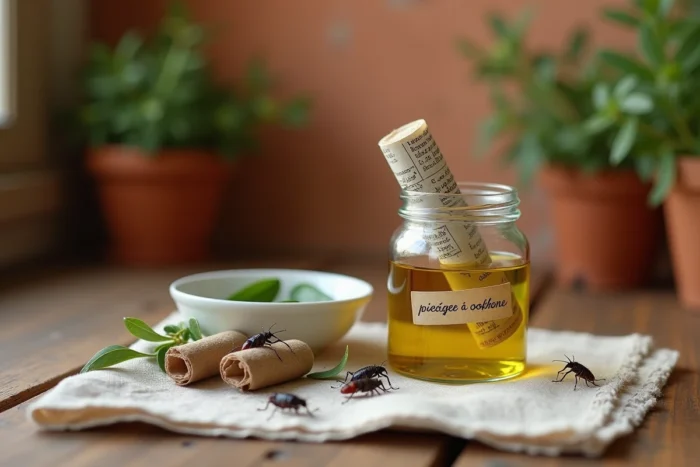
Insecticides as a last resort
Pyrethroid-based insecticide sprays kill ophones on contact. Their use is justified when the invasion is massive and previous methods are not sufficient to reduce the population quickly enough. Apply them in cracks, crevices, and passage areas, never on food preparation surfaces.
Ventilate the treated room for several hours and keep children and pets away during the drying time.
Persistent invasion of ophones: when to call a professional
If despite sealing, managing humidity, and direct treatments, ophones return after a few weeks, the problem is likely in the building structure. A damp crawl space, a faulty drain, or degraded insulation can maintain an inaccessible breeding ground without the right equipment.
A pest control technician has diagnostic tools (endoscopic camera, wall hygrometer) that allow for precise location of the source. The treatment then targets the breeding ground, not just the visible symptoms.
- Request a diagnosis before any treatment estimate: a serious professional inspects before spraying.
- Ensure that the company offers post-intervention follow-up, with a control visit a few weeks later.
- For tenants, regulations on decent housing may require the landlord to finance pest control when the infestation is related to the structure or deterioration of the building.
A precise diagnosis of the building avoids paying for repeated treatments that do not resolve anything. The majority of ophone invasions in the home are resolved permanently when access is sealed, humidity is eliminated, and remaining individuals are treated as needed. Insecticide alone never replaces work on the building.