The autumn-winter 2026 fashion is not just about a color palette or a standout silhouette. Behind the current fashion trends, a dual movement is redefining clothing choices: pieces and materials making a strong comeback on the runways, and a European regulatory framework that alters the lifespan of clothing. Understanding these two dynamics allows for more sustainable and relevant style choices.
Increase in searches by piece and material: what Tagwalk data reveals
The growth figures from the Tagwalk platform provide a concrete perspective on what is truly rising this season. Rather than listing “favorites,” this table compares the increases in searches for the most cited pieces in the autumn 2026 runway analyses.
| Piece or material | Search growth | Stylistic register |
|---|---|---|
| Tweed | +491 % | Structured chic, couture heritage |
| Legging pants | +308 % | Graphic silhouette, 60s |
| Bomber | +146 % | Casual sport, layering |
| Animal print | +94 % | Statement, maximalist |
| Extra-long sleeves | +78 % | Offbeat proportion, avant-garde |
| Pencil skirt | +55 % | Office, fitted minimalism |
The dominance of tweed, with a growth nearly five times its previous visibility, marks a return to textured materials. The legging pants, worn close to the body, contrast with the wide cuts that dominated previous seasons. To follow fashion trends on Verita Press, these growth discrepancies help distinguish a micro-trend from a true underlying movement.

Autumn 2026 colors: burgundy, chocolate, and reimagined neutrals
Burgundy emerges as the color of the season. Several brands are placing it at the forefront of their back-to-school selections, and it works well on a blazer, knitwear, or a midi skirt.
On the other hand, classic neutrals (beige, ecru, khaki) do not disappear but change roles. They no longer structure the look alone. They serve as a base for combinations with chocolate or burgundy, which provide the chromatic depth that the season demands.
- Burgundy: works on all pieces, from jeans to coats, and pairs with both black and camel.
- Chocolate: an alternative to black for accessories and bottoms, less contrasting but warmer.
- Ecru and khaki: serve as a clothing foundation, to be combined rather than worn in a total look.
This palette reflects a season that favors warm and saturated tones. Pastels and fluorescents, which were very present in spring, give way to shades that gain intensity with the autumn light.
Key pieces for the back-to-school wardrobe: blazer, knitwear, and straight jeans
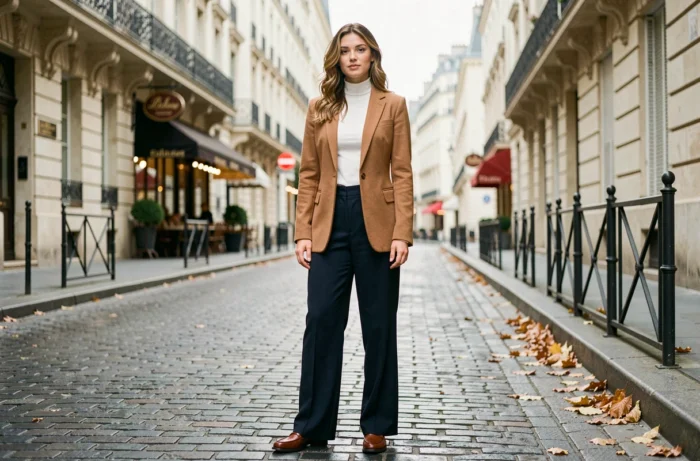
Three categories of clothing concentrate the style analysis recommendations this season. The blazer remains the most versatile piece in the autumn wardrobe. Worn over straight jeans or fluid trousers, it effortlessly structures a silhouette.
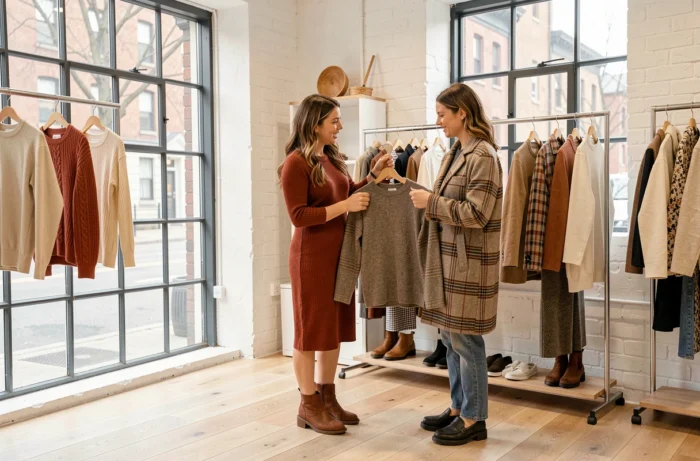
Knitwear returns in various forms: turtleneck sweaters, knitted polos, oversized cardigans. What changes this season is the emphasis on visible textures (cables, wide ribs, openwork knits) rather than smooth and fine knits.
Straight jeans are gradually replacing wide jeans in back-to-school selections. The straight cut offers a compromise between slim (in retreat) and wide leg (still present but losing momentum). It adapts to most body types and works with both flat shoes and heeled ankle boots.
How to pair these pieces without falling into the total catalog look
The trap would be to wear a blazer, straight jeans, and solid knitwear in a neutral color scheme. The season invites breaking this base with a contrasting element: an animal print on a scarf, a bomber replacing the blazer for a more casual register, or a strong color like burgundy on a single item.
A successful autumn look relies on a single point of visual tension, not on the accumulation of trendy pieces.
European regulation and fashion: what changes concretely in 2026
Trends are no longer formed solely on the runways. The EU has prohibited since July 19, 2026, the destruction of unsold textiles for large companies. This measure forces brands to resell, donate, reuse, or recondition their stocks, with limited exceptions for hazardous or counterfeit items.
This change has a direct effect on the available supply. Brands that overproduced to feed ongoing sales must now manage their stocks differently. The likely consequence: tighter collections, less frequent restocks, and a premium on pieces that sell at full price.
- Prohibition on destroying unsold textiles for large companies (applicable since July 2026).
- Obligation of transparency regarding the volumes of unsold items destroyed, increasing public pressure.
- Expanded responsibility for textile producers, with expected European harmonization by 2028: brands will finance more collection, sorting, and recycling.
- Mandatory digital product passport starting in 2027 for textiles, including composition, reparability, and end-of-life.
For consumers, these developments mean that investing in durable and well-chosen pieces becomes both a stylistic and economic reflex. A well-made tweed blazer or a well-cut straight jean will last through several seasons, which aligns perfectly with the direction of the regulations.
The back-to-school 2026 outlines a wardrobe where search increases confirm the return of textured materials and fitted cuts, while the European regulatory framework encourages buying less but better. Tweed, burgundy, and straight jeans are not just seasonal trends: they are choices that align with a profoundly changing market.